
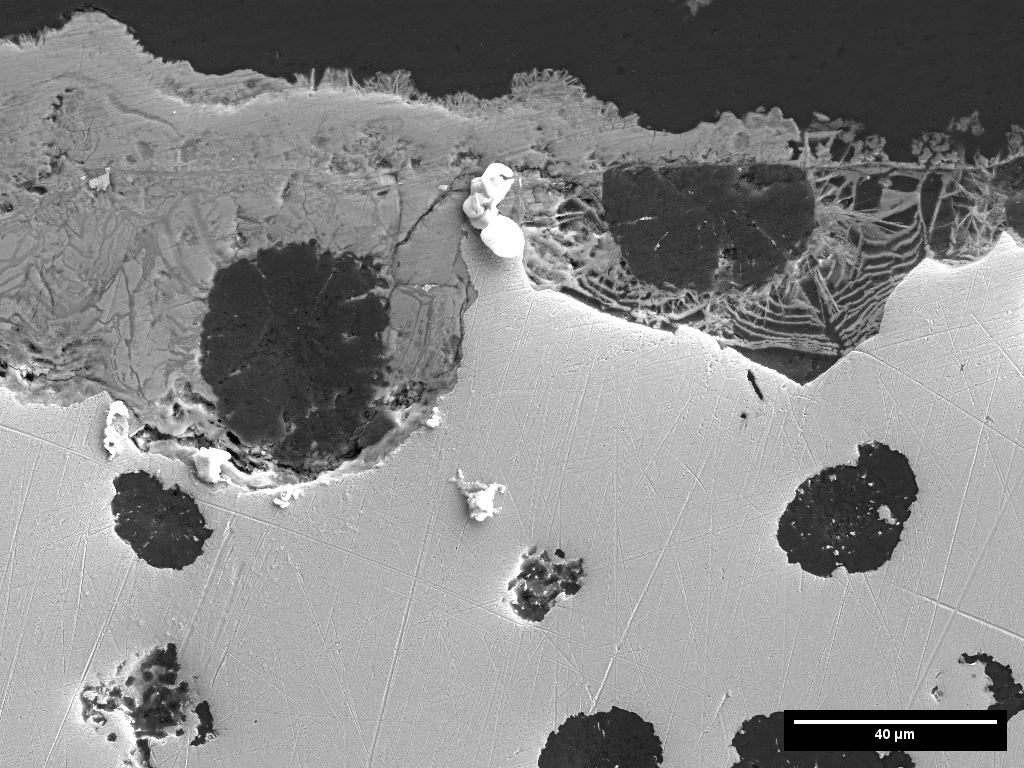
Fig. 1: Corrosion zone in cast iron with spheroidal graphite after storage for 4 months at 60 °C in bentonite suspension [1]
Fig. 1: Corrosion zone in cast iron with spheroidal graphite after storage for 4 months at 60 °C in bentonite suspension [1]

Christiane Stephan - Scherb, Louisa Panjiar
Forschung
[1] Panjiyar, L., Haupt, E. M. I. W., and Stephan-Scherb, C.: Comprehensive insights into corrosion processes of potential canister materials in bentonite suspension at elevated temperature, Third interdisciplinary research symposium on the safety of nuclear disposal practices, Berlin, Germany, 17–19 Sep 2025, safeND2025-28, https://doi.org/10.5194/safend2025-28, 2025.
[1] Panjiyar, L., Haupt, E. M. I. W., and Stephan-Scherb, C.: Comprehensive insights into corrosion processes of potential canister materials in bentonite suspension at elevated temperature, Third interdisciplinary research symposium on the safety of nuclear disposal practices, Berlin, Germany, 17–19 Sep 2025, safeND2025-28, https://doi.org/10.5194/safend2025-28, 2025.
Christiane Stephan - Scherb, Louisa Panjiar
Forschung
